Private Cloud: what is it, why do I need it, and how to choose it?
- What is a private cloud
- How does a private cloud work
- What are private clouds
- Why is a private cloud more reliable than a public cloud
- Private, public and hybrid cloud: what are the differences?͏
- Private cloud pros and main advantages
- Cons
- Who should choose a private cloud
- What a private cloud technically consists of
- How to control a cloud
- Cloud scenarios
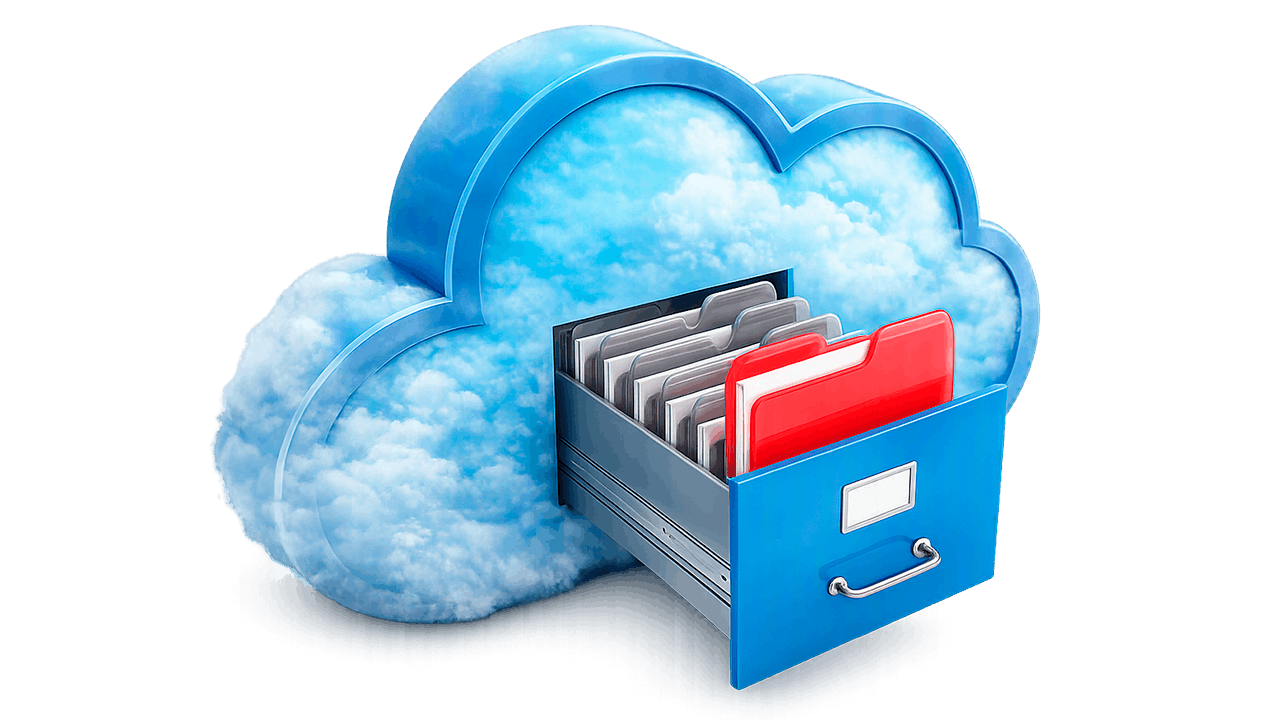
A private cloud - ͏is a dedicated cloud infrastructure that is used by one company, rather than many different customers at once. Unlike a public cloud, where network servers and storage are shared among hundreds of tenants, computing resources here are either physically isolated or logically tied only to your business.
How does a private cloud work?
Technically, the cloud is built on three layers:
- Virtualization - hypervisor (VMware, KVM, Hyper-V), which physically splits servers into separate virtual machines.
- Management software - a panel through which the administrator creates, enlarges and adjusts resources without contacting the vendor.
- Automation - orchestrators (OpenStack, Kubernetes, VMware vRealize) distribute the load, deploy backups, and ensure that the cloud runs smoothly.
What are private clouds?
| Type | Where the equipment is located | Who manages it | Who is suitable for cloud |
|---|---|---|---|
| Local cloud (On-Premises) | In the company's own data center | The company's own IT team | Companies with strict regulatory requirements, banks, public sector |
| Managed cloud (Managed Private Cloud) | In the provider's data center | Provider under SLA | Business without DevOps engineers |
| Virtual Cloud (VPC) | In the provider's open loop, isolated segment | Shared, but the loop is logically separated | Companies that need the flexibility of an open cloud with the isolation of a private one |
VPC (Virtual Private Cloud) - this is not the same as a classic private cloud. The VPC physically shares the infrastructure with other clients, and isolation is achieved through software - network segmentation, separate VLANs, and access rights. Such a private cloud involves dedicated hardware that no one else uses.
Why is a private cloud more reliable than a public one?
Selection of specific equipment. The provider selects servers, disks, and network cards for a specific client task profile, such as NVMe arrays for databases with a high number of write operations. In the public domain, the configuration is averaged for the mass consumer.
Isolation from other users. Your virtual machines are not adjacent to others on the same physical node, and therefore no one's activity - from mining to DDoS attacks on a neighbor - will affect the performance of your infrastructure.
Additional information security measures. In Private Cloud, it is easier to install your own cryptographic protection tools, certified firewalls and intrusion detection systems adapted to the requirements of a specific industry.
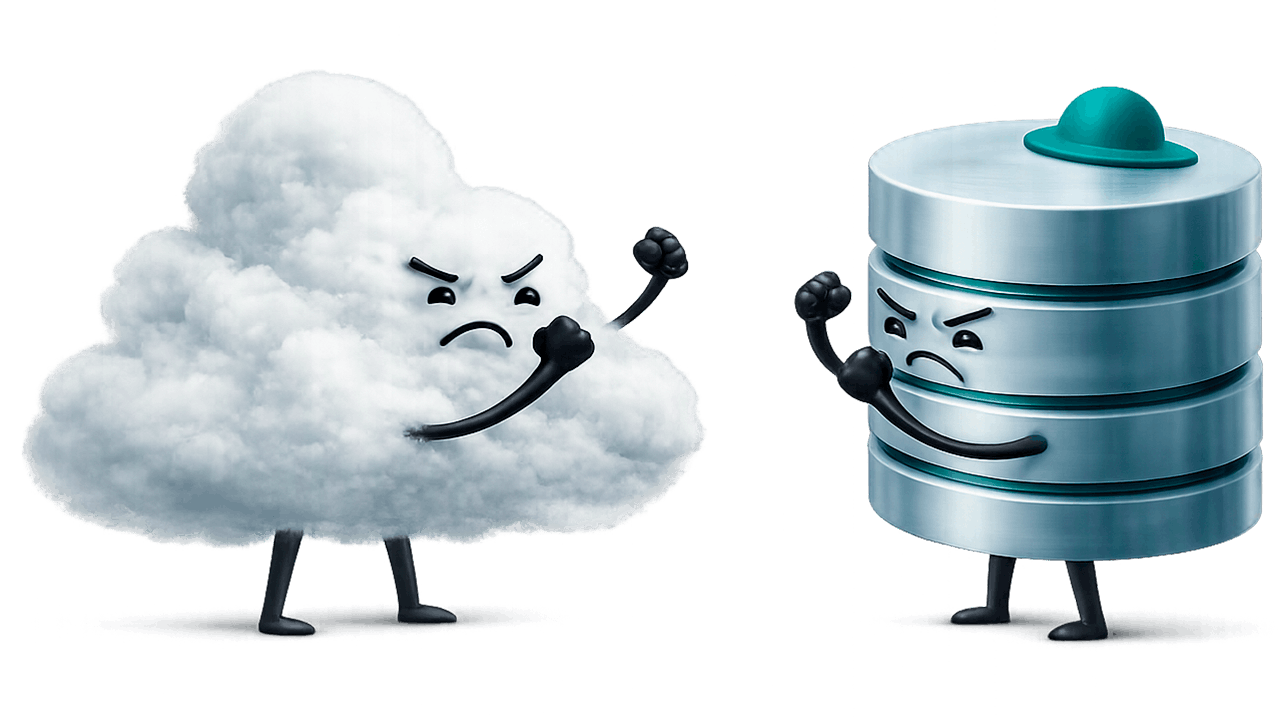
Private, public, and hybrid cloud: what are the differences?͏
| Criterion | Public cloud | Private cloud | Hybrid cloud |
|---|---|---|---|
| Cost of entry | Low, payment upon use | High, requires CAPEX or a long-term contract | Average |
| Scalability | Almost unlimited | Limited by the volume of purchased equipment | Flexible - peak load is transferred to an open cloud |
| Security and control | Lower, resources are shared | Maximum control over data and access | Depends on load distribution |
| Compliance with regulations (152-FZ, PCI DSS, etc.) | Requires verification of the provider | It is easier for auditors to confirm | Partially |
| Deployment speed | Minutes | Weeks or months when purchasing equipment | Average |
| Typical user | Startups, sites with variable load | Banks, medicine, government agencies | Large businesses with seasonal peaks |
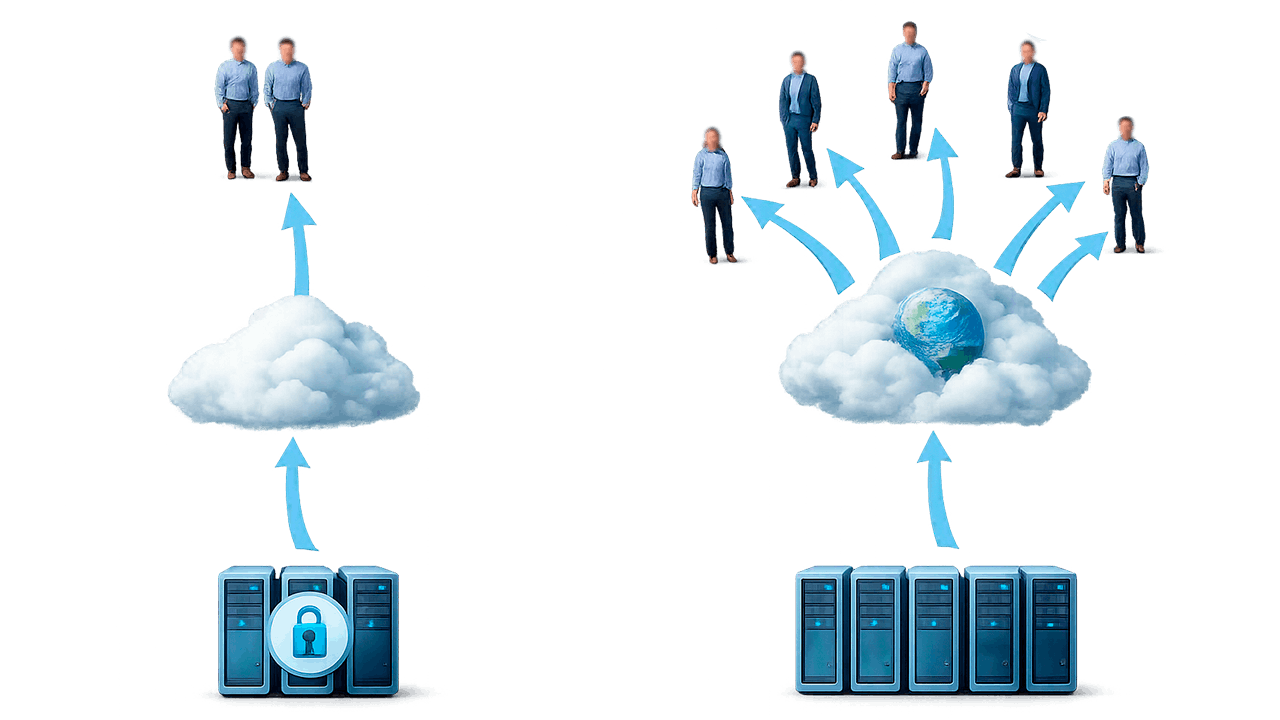
Advantages of a private cloud
The main advantages are security, predictable performance and the possibility of deep customization.
Improved security and controls.
Information does not leave the selected outline, access is configured according to the company's internal policies, and not according to the provider's average template. This is critical for those who are required to undergo an audit in accordance with regulatory requirements.
Individual settings.
You can select a specific configuration of the processor, RAM, disk subsystem and network for the load profile, up to the installation of graphics accelerators for machine learning.
Predictable performance.
Resources are not shared with neighbors, which means there is no "noisy neighbor" effect when someone else's load eats up your IOPS.
Cost-effectiveness over a long distance.
With stable, predictable workload, a private cloud with a 3-5-year horizon often comes out cheaper than a permanent lease of equivalent capacity in a publicly accessible one.
Flexible architecture.
The client chooses the cloud and what to deploy: classic virtual machines, Kubernetes clusters, databases as a service, or their own application store.
Backup and disaster recovery.
Dedicated storage and separate backup channels provide faster recovery time (RTOS) compared to shared open resources.
Disadvantages of a private cloud
High initial costs.
Purchasing equipment, virtualization licenses, and paying for specialists requires significant investments at the start.
Limited scalability.
Expanding a public cloud is a matter of a few clicks, and expanding a private cloud is a matter of purchasing and installing new equipment, which takes weeks.
Increased operational complexity.
We need a team that understands virtualization, networks, and storage systems, or we will have to give control to a provider using the Managed Private Cloud model.
The risk of equipment downtime.
Without redundancy at the data center level, a single node failure can affect more services than in a distributed public one.
Who should choose a private cloud instead of a public one
- The financial sector. Banks are required to comply with the requirements for storing and processing personal and payment data, which are easier to verify on a dedicated infrastructure.
- Healthcare. Patients' medical data is subject to separate confidentiality requirements, and the simplicity of the system directly affects the provision of care.
- Government organizations. The public sector is often required to post data on the territory of the country and on certified infrastructure.
- Manufacturing companies. Industrial control systems (ACS) require isolation from external networks and stable latency without surges.
- Companies with AI and HPC workloads. It is more profitable to train models on GPU clusters on personal hardware if the download is constant, rather than one-time.
What does a private cloud technically consist of?
When a client orders a cloud from a hoster, he usually receives the following set of components:
| Component | Purpose |
|---|---|
| Virtual servers | Basic computing power for applications |
| Dedicated networks | Isolated VLANs and communication channels without crossing with other clients |
| Dedicated storage | Disk arrays for databases and file storage |
| Backup | Regular snapshots and storage of copies on separate capacities |
| Control panel | Self-service: VM creation, monitoring, scaling |
| Kubernetes and containers | Orchestration of microservice applications |
| GPU accelerators | For machine learning and rendering tasks |
| S3-compatible storage | Object storage for backups and statics |
How to control clouds
On your own - if your organization has a team with experience in managing virtualization, networks, and storage systems. It requires internal regulations, monitoring, and engineers on duty.
According to the Managed Private Cloud model - the hoster takes over the operation, updates and availability SLA, and the client works through the control panel and ticket system. This relieves the workload from the internal IT department and minimizes the risk of downtime due to lack of expertise.
Scenarios used
- A local private cloud for full control over information in organizations with stringent security requirements.
- A hybrid strategy where the main systems use a private cloud, and peak traffic (for example, seasonal sales) is transferred to the public.
- Enterprise applications (ERP, CRM) that are critical for business continuity.
- Private cloud as a service (PCaaS) is a simplified option for obtaining personal infrastructure without purchasing special equipment.
- Virtual Desktops (VDI) for distributed teams that need a single secure access loop to corporate information.
- Test and staging environments isolated from production, but with the same security guarantees as the main infrastructure.
The decision is almost always made at the junction of two issues: how much does a simple service cost for a business and what penalties or reputational risks do you face if information leaks? The higher the cost of a mistake, the faster the personal architecture pays off.
FAQ
What is the difference between them if you use a public cloud?
A public cloud is used as an "apartment building" where resources are shared among all residents. A private cloud is used as a "separate house" built and configured for a single owner.
Resource isolation and the ability to configure your own access policies make the cloud a more secure option for storing important information, but the final level of protection still depends on how the network encryption and redundancy are configured.
When loading is predictable, there are regulatory requirements for storing information, and the budget allows you to invest in architecture for several years ahead.
The cloud is usually deployed in four steps: calculating the required capacity for the current load, selecting and reserving special equipment in the data center, configuring virtualization and networking, and then migrating applications with testing on the test circuit before switching production loads.
How can I compare a public cloud with a private architecture?
Compare three parameters: download predictability, access conditions to the information storage location, and the availability of an internal administration team. If the download is stable and the security conditions are strict, such a private cloud is justified. If the download is jumping, but the command is not there, use a public cloud or a Managed Private Cloud.
In addition to the advantages of banks, medicine, and the public sector listed above, telecom operators, retailers with their own loyalty systems, and industrial enterprises with automated process control systems receive noticeable benefits and effects, where channel latency and stability are critical for hardware operation.
Conclusion
A private cloud is not about fashion, but about matching architecture to real business objectives. If you have a predictable workload and strict cybersecurity requirements that cannot be placed on shared facilities, a personal architecture will provide advantages and pay off with control and reliability.